My Honest Take on the Protein Trend
Everywhere you look, protein is front and center, from chips and granola bars to bread and water. People naturally gravitate toward these products because they know protein is essential for weight loss and management. Since I get so many questions about protein, I wanted to share my honest take. I'm not a fan, and I don't eat a single one of these heavily marketed items.
Instead, I meet my protein needs through whole foods: lean animal proteins, low-fat dairy, eggs and egg whites, occasional protein bars, and trace amounts from beans. While my breads, pastas, and granolas may contain protein, that is never why I buy them.
3 MAIN FOCUSES WHEN PURCHASING PREPACKAGED FOODS:
- CALORIES: Do they fit within my meal framework? For example, if I have 140 calories allotted for my breakfast carb, I look for a bread or English muffin that fits.
- TASTE: I want my food to taste good! I don't sacrifice flavor for added fiber or protein, which I get elsewhere.
- INGREDIENTS: I am not hyper focused on "clean eating" or all-natural labels. I buy prepackaged foods when they make sense and taste good, because most foods have a place in the right quantities. However, I do actively avoid certain additives like sugar alcohols, excessive fiber, and added whey protein simply because they upset my stomach.
WHY THIS PHILOSOPHY WORKS:
My entire approach to weight management is built on creating a framework you actually look forward to eating. This is why I've been able to maintain my weight comfortably for over a year. There isn’t a single meal I don’t enjoy. This is what I want people to achieve and the foundation to sustainable weight loss.
When I eat full-flavor carbs I genuinely love—like cinnamon raisin bread, flavorful granola, seasoned potatoes, etc.—my cravings virtually disappear. In the past, trying to avoid these foods or "healthify them" only led to overeating cookies or ice cream by nightfall. Enjoying foods for what they are leaves me far more satisfied. I apply this same principle to fats and proteins. You will not catch me buying fat-free cheese or choking down protein that I do not enjoy!
KEY TAKEAWAYS FOR YOUR ROUTINE:
- DON'T FALL FOR CLEVER MARKETING: If protein is called out on the front of the package but calories are conveniently omitted, it's likely not a great protein source. You are paying for that protein with extra calories and extra dollars.
- CUSTOMIZE YOUR TRADEOFFS: If you love higher-fat proteins, simply reduce your calories from carbs or fats to stay within your daily allotment.
- CALORIES MATTER: Look at your total calories for each meal and piece together what truly makes sense for you.
BELOW ARE A FEW PRODUCTS I WANTED TO HIGHLIGHT AS EXAMPLES:
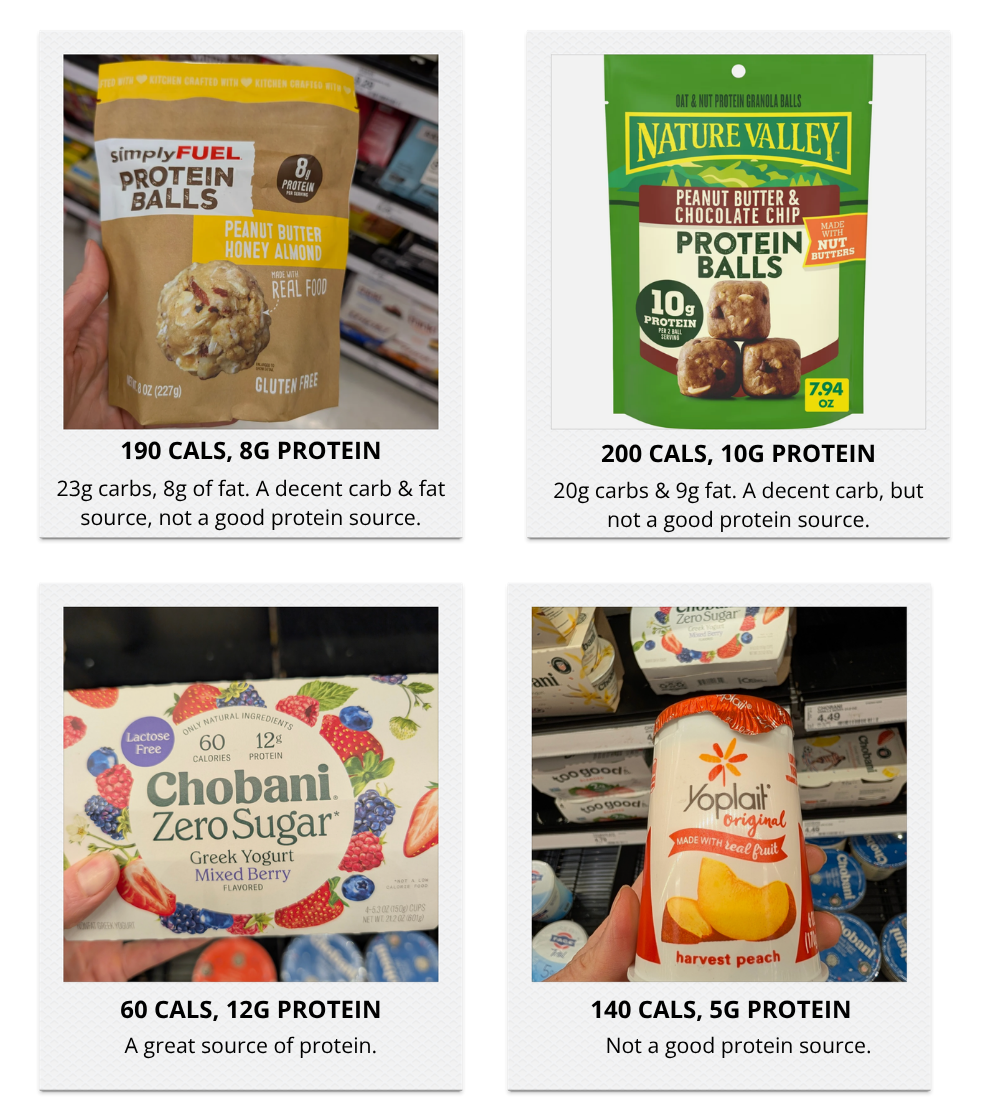
PROTEIN BALLS/BARS:
- Often marketed as "high protein," but not good primary protein sources.
YOGURTS:
- Yogurts have a huge range of products with varying nutritional value.
- Pay close attention to the nutritional facts. Focus on the following:
- Calories
- Grams of protein
- Grams of sugar
- Grams of fat
- Nonfat Greek yogurt can be a great low calorie, high protein option.
GRANOLA:
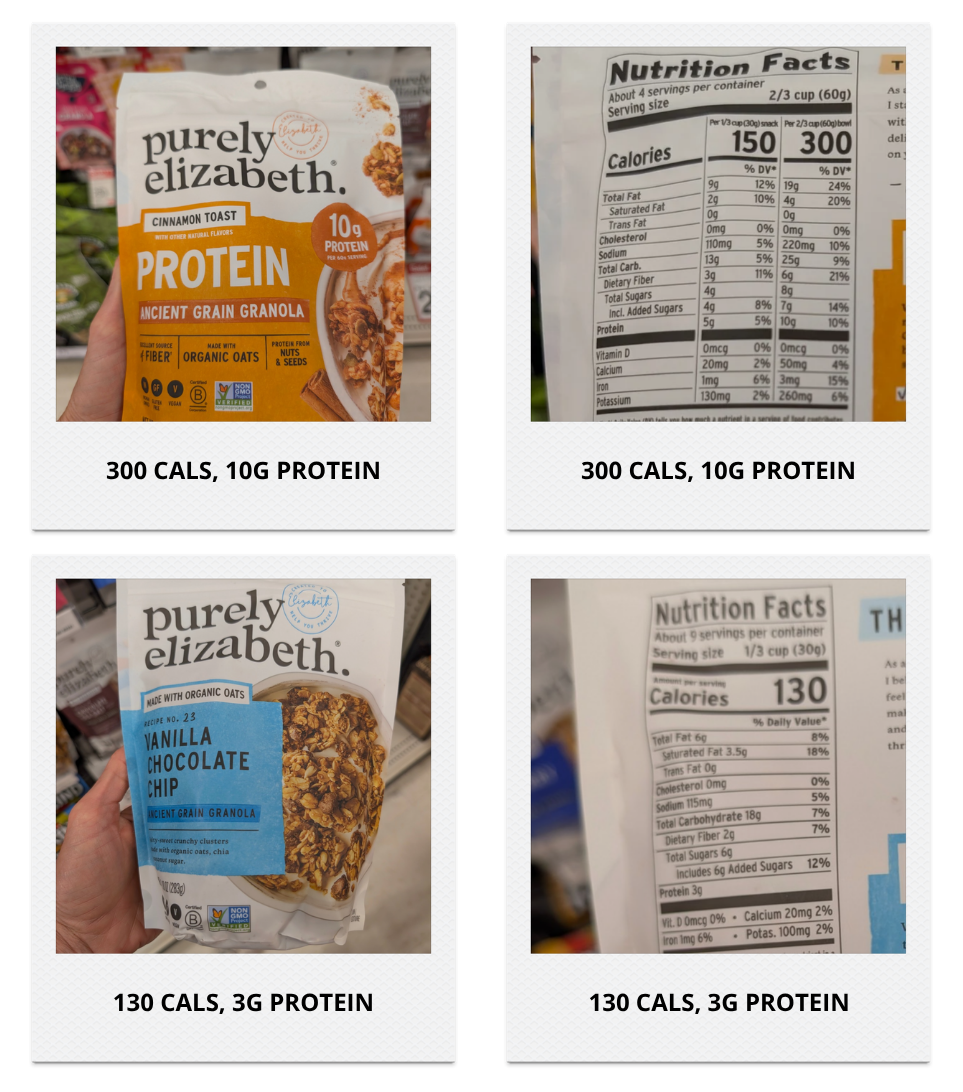
- I LOVE Purely Elizabeth granola & eat it daily. I am in no way discrediting this brand. I’m simply pointing out the marketing tactics used by the food industry.
- Watch the marketing call outs on the front of the package.
- The granola on the top advertises 10g of protein, but that is if you eat the larger serving which is 300 calories.
- Granola is typically a good source of carbs and/or fat, NOT a good source of protein.
- Opt for the one that tastes the best & forget about the protein.
- ADDITIONAL INFO: The granola calling out protein on the front is in a smaller bag at a higher price at Target ($6.39 for 8 oz versus $5.99 for 9 oz).


